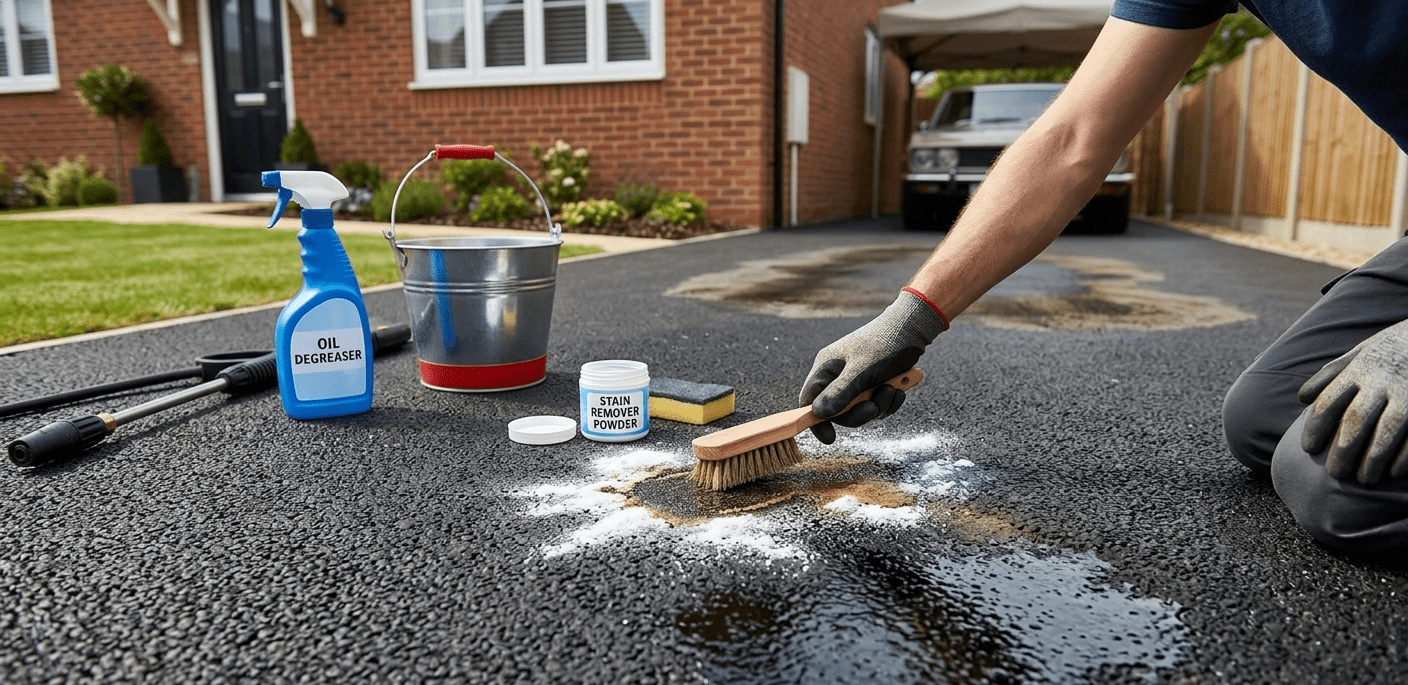
Oil spots on a blacktop driveway or asphalt surface are more than an eyesore. They soak into the tiny pores of the surface, darken the area, attract dust, and slowly weaken the material if left untreated. The good news is that you can lift most oil stains using simple supplies you already have at home, no special machine required.
This practical, step-by-step guide explains why oil sticks to blacktop, what to use for fresh and old marks, and how to restore a clean, even look safely.
Why Oil Is Hard to Remove from Blacktop
Blacktop (asphalt) is slightly porous. When oil drips, it seeps below the surface instead of sitting on top. Sun heat makes the oil thinner, helping it travel deeper into the pores. Over time, the stain bonds with dust and grime, creating a stubborn dark patch.
To remove it effectively, you must:
- Absorb as much oil as possible
- Break down the greasy residue
- Rinse and repeat if needed
Supplies You’ll Need
Most of these items are common in homes:
- Paper towels or old rags
- Baking soda or cornstarch
- Dishwashing liquid (degreasing type)
- White vinegar (optional)
- Warm water
- A stiff brush or old broom
- Bucket
- Garden hose
- Cat litter or sawdust (for heavy spills)
First Step Depends on the Age of the Stain
If the spill is fresh (minutes to hours old)
You have the best chance of removing it completely.
If the stain is old (days or weeks)
You’ll need repeated treatment and a stronger degreasing approach.
Method 1: Absorb Fresh Oil Immediately
- Place paper towels over the spill and press gently
- Do not wipe—blot to avoid spreading
- Cover the area with baking soda, cornstarch, or cat litter
- Leave it for 1–2 hours to soak up the oil
- Sweep it away
This step alone can remove a large portion of the oil before it penetrates deeper.
Method 2: Dish Soap Degreasing Treatment (Very Effective)
Dish soap is designed to cut grease, which makes it perfect for oil stains.
- Pour a generous amount of dish soap directly on the stain
- Add a small amount of warm water to activate it
- Scrub firmly with a stiff brush for 3–5 minutes
- Let the soapy mixture sit for 20 minutes
- Rinse with a hose
You will see the stain lighten after the first attempt.
Method 3: Baking Soda + Vinegar Reaction
This combination helps lift oil trapped inside pores.
- Sprinkle baking soda over the stained area
- Slowly pour vinegar on top (it will fizz)
- Wait 10–15 minutes
- Scrub with a brush
- Rinse thoroughly
This method is helpful for medium to old stains.
Method 4: For Old, Dark, Set-In Stains
Older marks need repeated cycles.
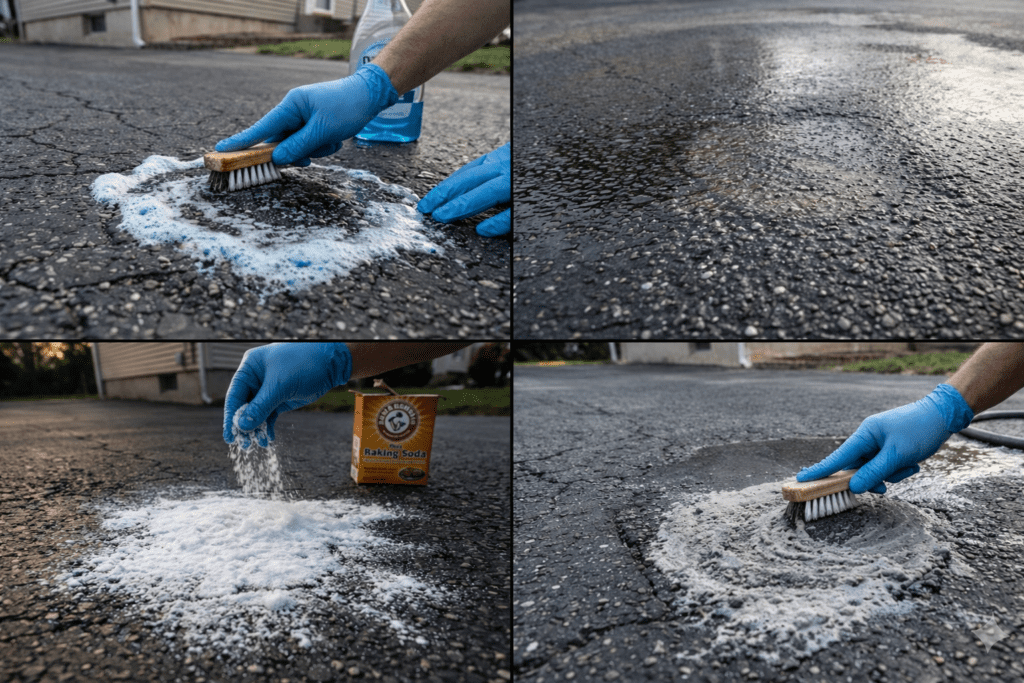
- Apply dish soap and scrub
- Rinse and let dry
- Apply baking soda and leave overnight
- Scrub again the next day and rinse
Two to three rounds often produce excellent results.
Method 5: Using Cat Litter or Sawdust for Heavy Spills
If a large amount of oil leaked:
- Spread cat litter or sawdust thickly over the area
- Step on it to press it into the surface
- Leave for several hours or overnight
- Sweep away and follow with the dish soap method
Helpful Scrubbing Technique
- Use circular motions with firm pressure
- Focus on the edges where oil spreads invisibly
- Avoid metal brushes that can damage asphalt
Patience during scrubbing makes a big difference.
Rinsing the Right Way
Use a steady stream from a garden hose. Avoid very high pressure at close range because it can erode the surface. Rinse until no soap remains.
Let the area dry fully to check the real result. Wet asphalt can hide remaining stains.
What If the Stain Is Still Visible?
Don’t worry. Deep stains often fade gradually.
Repeat:
- Degreasing soap scrub
- Baking soda treatment
Each round pulls more oil from the pores.
Things You Should Never Use on Blacktop
Avoid these common mistakes:
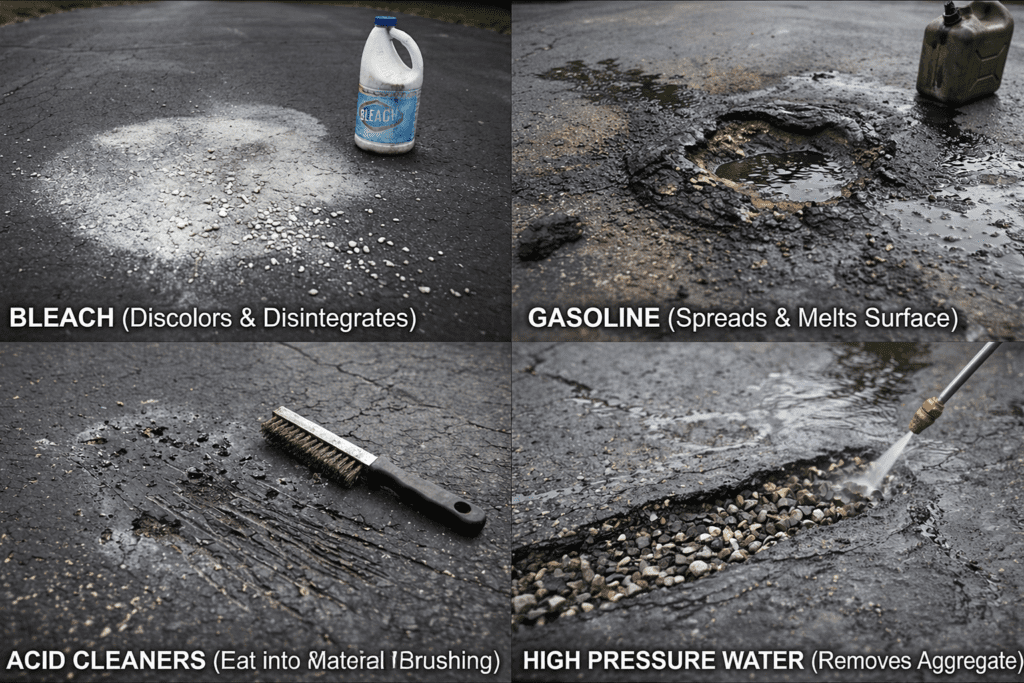
- Bleach (discolors surface)
- Gasoline (dangerous and spreads stain)
- Harsh acid cleaners
- Wire brushes
- Pressure washer at very close distance
These can damage the driveway permanently.
Natural Sunlight Helps
After cleaning, allow direct sunlight on the area. Heat helps evaporate leftover oil residue and improves results over time.
How to Prevent Future Oil Stains
Prevention is easier than cleaning:
- Fix vehicle oil leaks quickly
- Place cardboard under parked cars
- Seal your driveway once a year
- Clean small drips immediately
A sealed surface resists oil penetration.
How Often Should You Clean Blacktop?
Regular maintenance keeps it looking good:
- Inspect driveway weekly
- Clean any fresh spots immediately
- Wash the surface monthly with mild soap and water
Signs the Stain Is Fully Removed
- The surface color matches the surrounding area
- No greasy feeling when touched
- No dark patch visible after drying
If slight discoloration remains, sunlight and time usually fade it further.
When to Consider Professional Help
If the stain is months old and very deep, or the driveway is unsealed and heavily saturated, professionals may use commercial degreasers. But for most household stains, DIY methods work well.
Summary: Simple Steps That Work
- Blot fresh oil quickly
- Absorb with baking soda or cat litter
- Scrub with dish soap and warm water
- Use baking soda and vinegar for deeper lifting
- Repeat if needed and let dry in sunlight
Consistency is the key to success.
Final Thoughts
Oil stains on blacktop may look permanent, but they rarely are. With basic household items and the right method, you can restore your driveway’s appearance without machines or expensive products. Acting quickly for fresh spills and patiently treating older stains will give you the best results.
A clean driveway not only looks better but also protects the surface from long-term damage. Keep these methods in mind, and you’ll be ready to tackle any oil spot with confidence.
